




Rauta experts have studied robotic solutions that are already working on construction sites and the prospects for the development of construction robots.
During the 2020s, the construction industry is actively implementing robotic processes, which is due to the rapid increase in the cost of human labor and the need to speed up project implementation times.
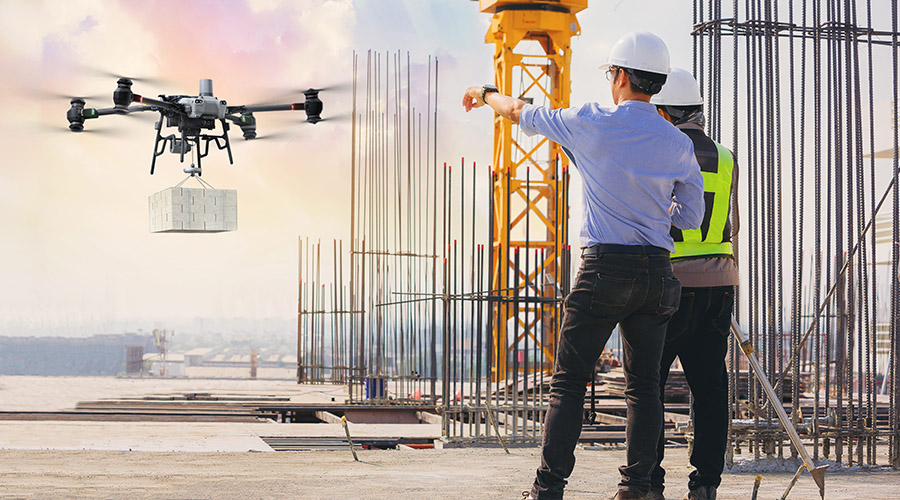
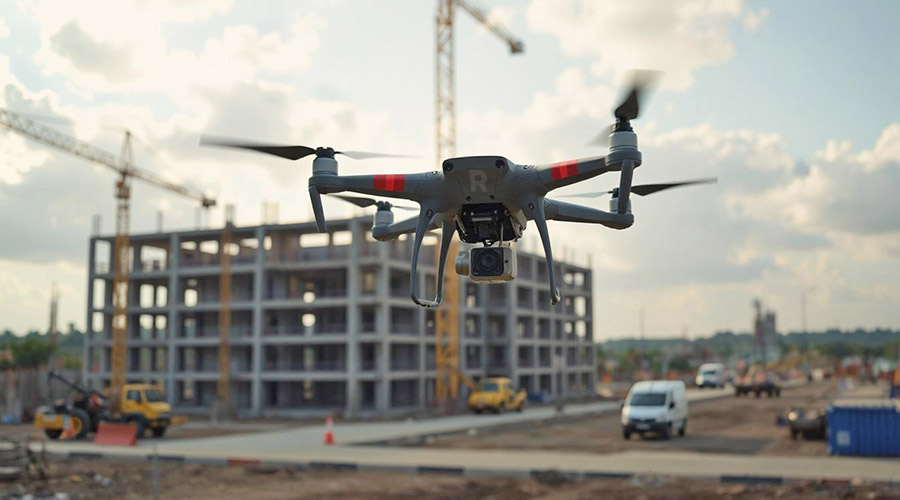
Today, cargo quadcopters, such as the DJI FlyCart 30, are already used on construction sites to carry materials to hard-to-reach places.
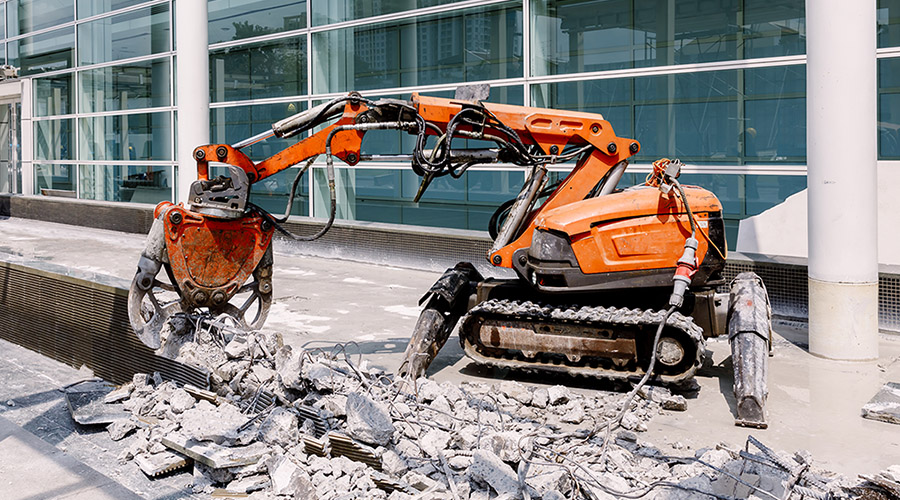
Husqvarna produces robotic dismantling machines that are designed to perform heavy work in difficult conditions, for example, inside buildings, on uneven surfaces or in confined spaces.
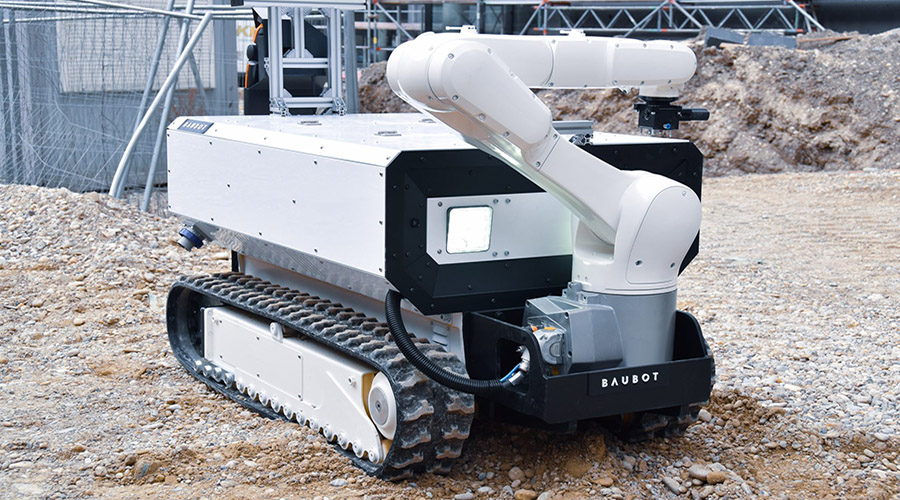
The Baubot construction robot can mill and drill walls, hammer nails, lay bricks, sand and paint surfaces, and transport loads weighing up to 500 kg.
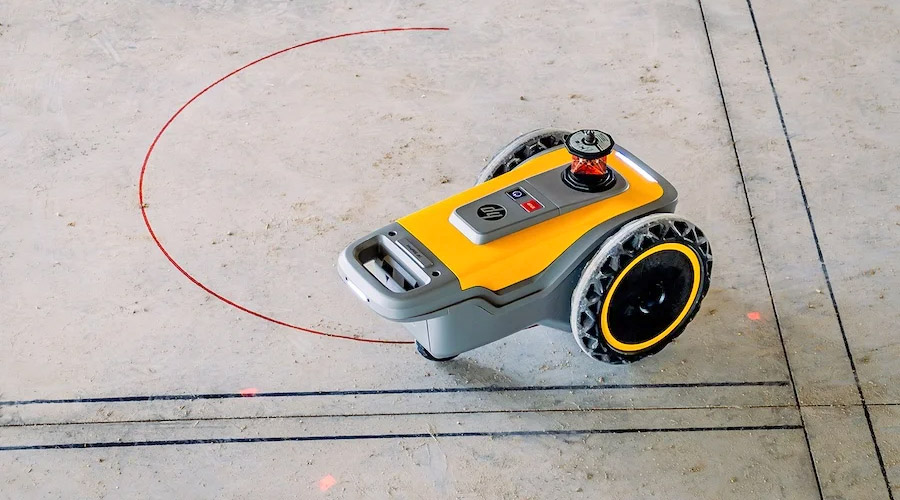
In 2022, HP introduced the SitePrint solution for automated high-precision layout of premises. Paired with a tacheometer, the robot printer is able to apply digital layouts from CAD programs to the foundation or floor.
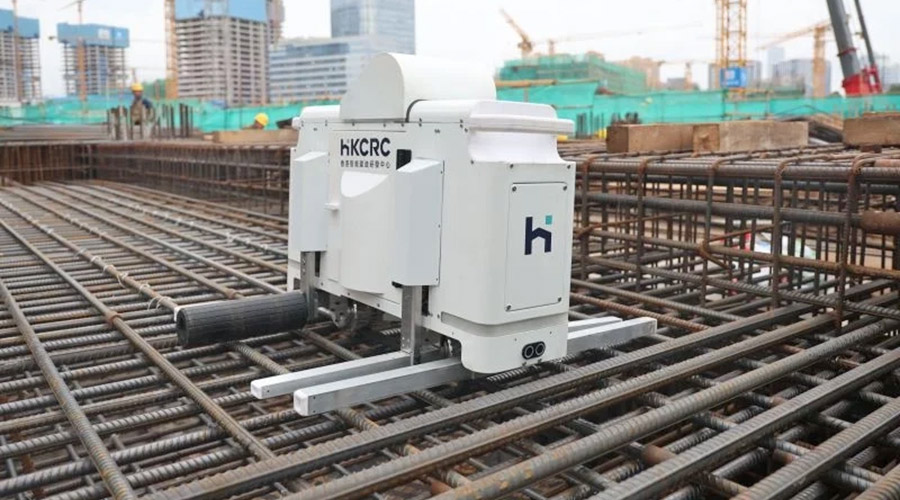
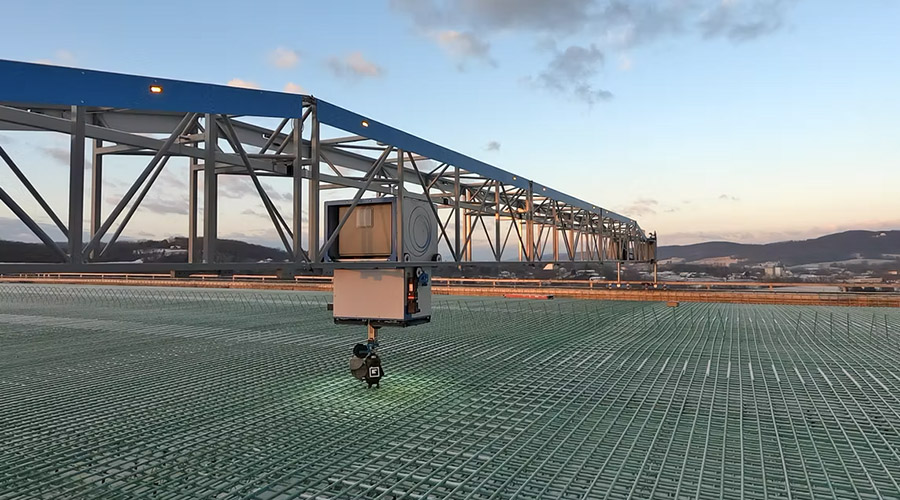
Various types of rebar tying robots - from small autonomous platforms, such as the HKCRC, to large rail mechanisms TyBOT, are capable of independently determining the position, positioning and tying rebar at a speed of more than 1200 ties per hour.
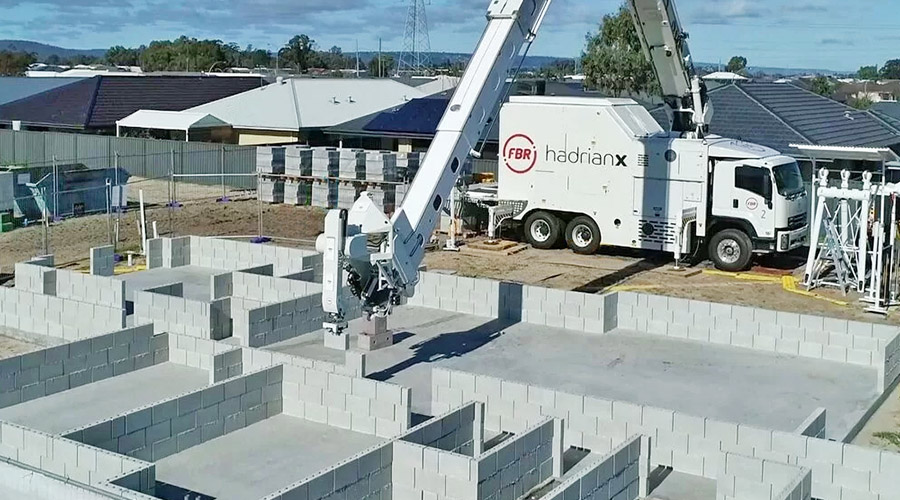
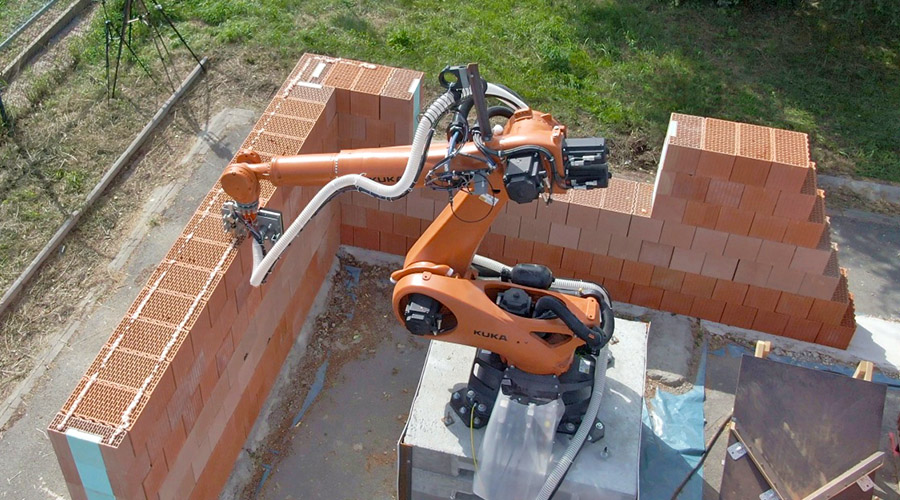
Several companies offer bricklaying robots that can increase masonry productivity by up to 5 times. In 2023, the Australian company FBR Limited introduced the world's first mobile robotic platform, Hadrian X, which builds structures from piece elements based on 3D models. Hadrian X can lay up to 500 blocks per hour with a maximum weight of up to 45 kg, lifting them to a height of up to 10 m. Another example of an automated masonry solution is a robot based on the KUKA arm, created at the Czech Technical University. Unlike Hadrian X, this device is a prototype, but it is able to independently apply mortar for masonry.
Very soon, some of the technical supervision and foremen functions will be taken over by robot controllers in the form of drones with artificial intelligence, which will monitor the work and its compliance with the project, as well as monitor violations of safety requirements: wearing personal protective equipment, identifying dangerous situations, etc.
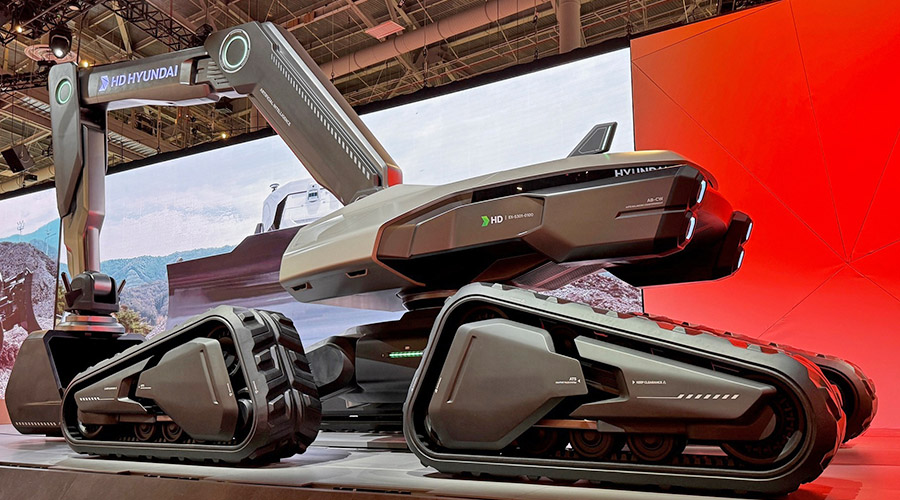
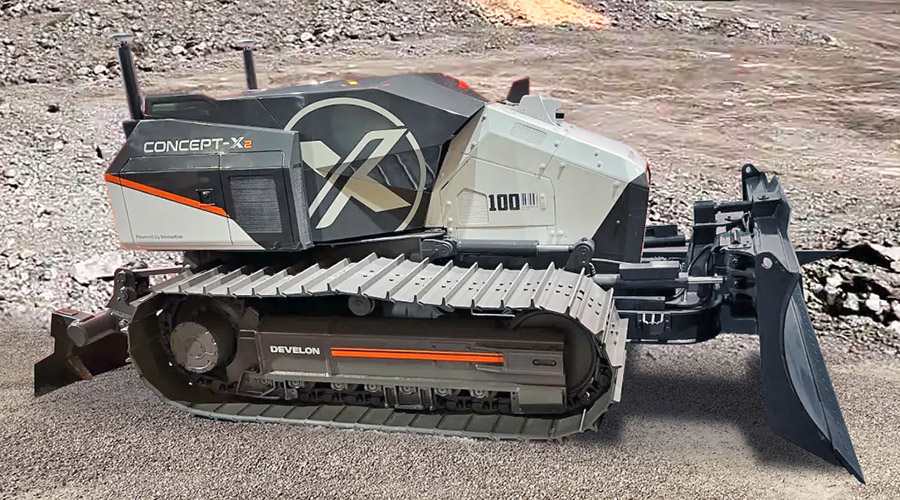
In 2024, HD Hyundai presented concepts of unmanned construction equipment controlled by artificial intelligence: the 4.5-meter excavator Concept-X and the bulldozer Concept-X2.
HKCRC is developing a number of construction robotic mechanisms designed to perform certain types of work: screeding, grinding, painting, tile laying, as well as unmanned cranes and trucks, which in the future may become indispensable in construction.
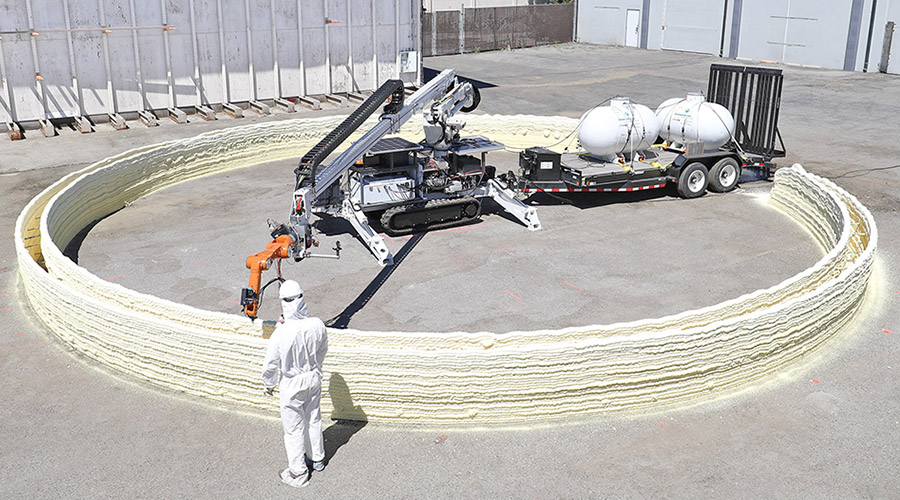
MIT has developed a solar-powered digital construction platform that can perform 3D printing of buildings, welding and excavator functions. The developers expect that the platform can be used not only on Earth, but also for building housing on the Moon and Mars.
The humanoid robot of the Japanese project HRP-5P is able to perform complex actions for installing drywall: it takes a sheet, attaches it to the frame and fixes it with construction tools.
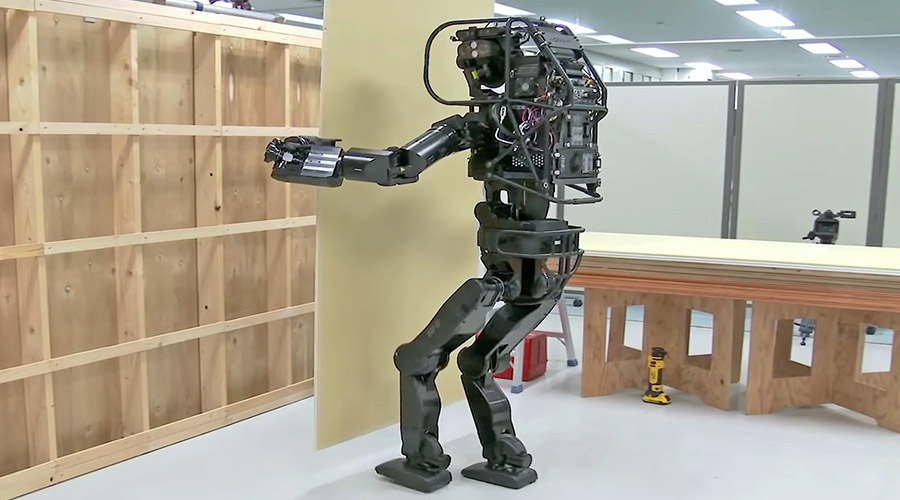
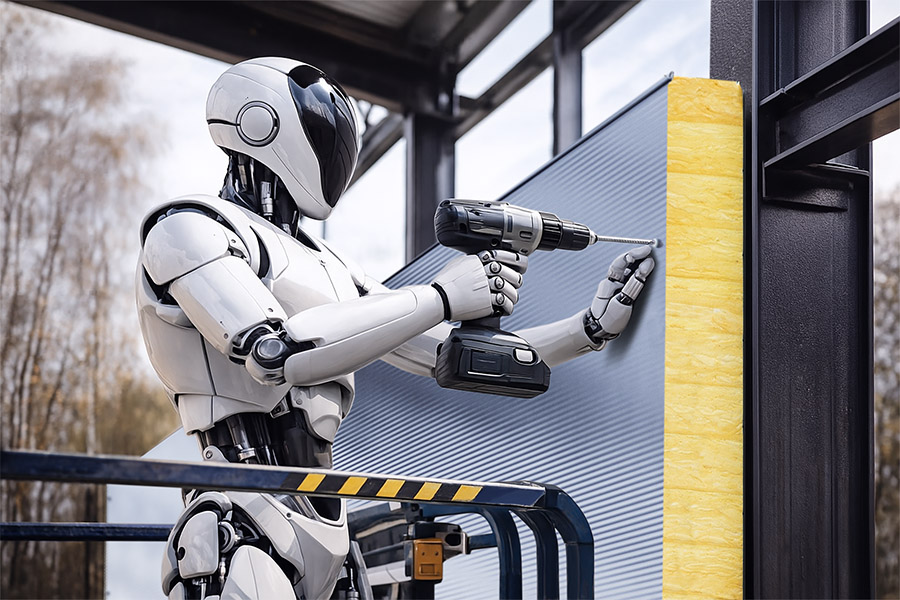
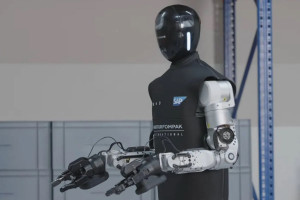
Today, dozens of companies around the world are actively developing humanoid robots and have already achieved considerable success - when the robot's movements are almost indistinguishable from human ones, and the android can perform actions that most people are unable to do. In the future, such robots, working according to AI algorithms and in conjunction with BIM, will be able to almost completely replace humans from the construction process.
Source: Rauta












_1.jpg)


вологість:
тисе:
вітер:



Заборонено і буде заблоковано:
- реклама
- спам та шахрайство
- образи, дискримінаційні висловлювання
Редакція не модерує коментарі, відповідальність за зміст коментарів несе автор коментаря. Редакція Build Portal залишає за собою право не погоджуватись з думкою автора коментаря, проте надає свободу слова відповідно до ст. 21, 24 та ст. 34 Конституції України.
Шановні читачі, читайте коментарі вдумливо, пам'ятайте, що автором коментарів можуть бути різні джерела.